Lars Fischer · 15 September 2026
Baltic Energy Expansion Meets Seal Conservation: Pomerania's Coastal Balancing Act
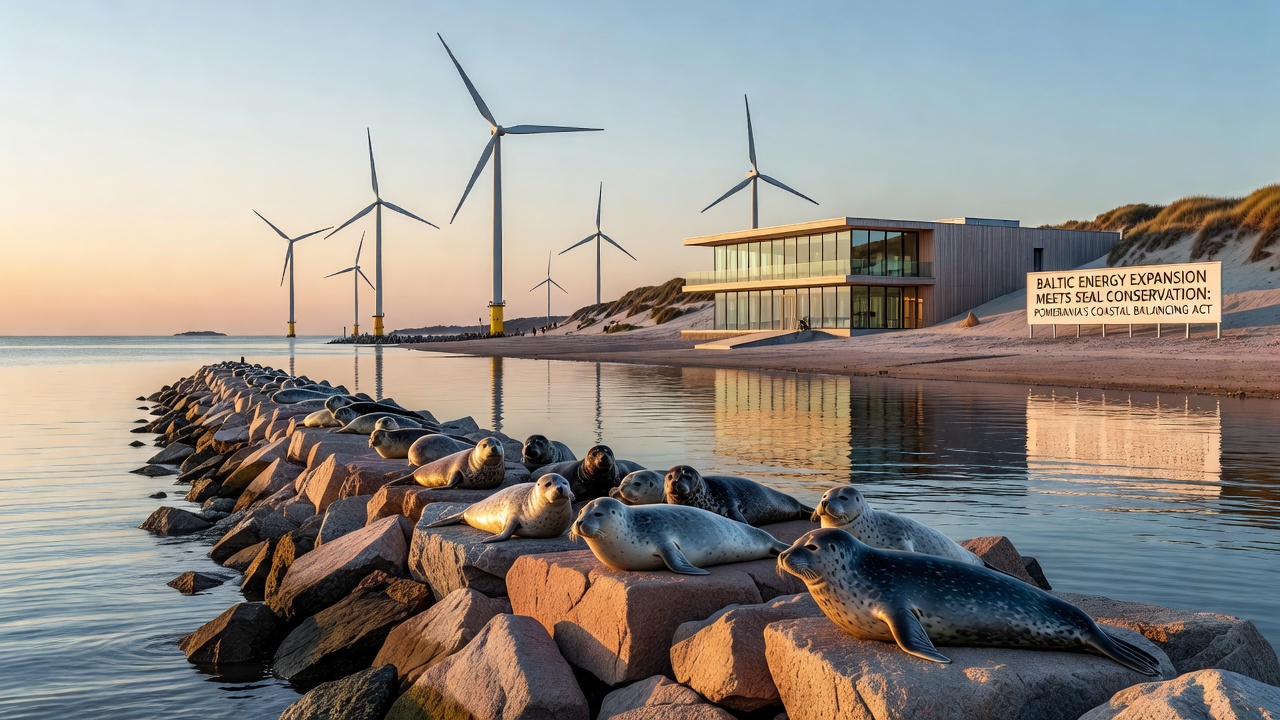
Poland's Pomeranian coast has become a focal point where offshore wind development intersects with grey seal populations that rely on the same shallow waters and sandbanks for resting and breeding; data from regional monitoring programs show that energy infrastructure projects scheduled for completion phases in September 2026 coincide with ongoing seal conservation measures under the Baltic Sea Action Plan.
Offshore wind farms in the Baltic have expanded rapidly since 2020 because national targets require 6 GW of installed capacity by 2030, and Pomerania's exclusive economic zone offers consistent wind resources at depths suitable for fixed-bottom turbines; government records indicate that three major projects now occupy areas previously identified as important haul-out sites for Halichoerus grypus, the grey seal whose numbers in Polish waters reached approximately 3,200 individuals by 2024 according to annual surveys conducted by the University of Gdańsk.
Energy Infrastructure Growth Along the Coast
Construction timelines published by the Polish Ministry of Climate and Environment list turbine installation campaigns beginning in late 2025 and extending through September 2026 for the Baltica and BC-Wind arrays, both located between 25 and 40 kilometers offshore from Łeba and Ustka; these projects connect to onshore substations via subsea cables that cross coastal migration corridors used by seals traveling between feeding grounds in the Gdańsk Bay and breeding sites on the Słowiński National Park sandbars.
Transmission infrastructure requires trenching through nearshore sediments, a process that temporarily elevates underwater noise levels above 160 decibels within a 500-meter radius, figures documented in environmental impact assessments submitted to the Regional Directorate for Environmental Protection in Gdańsk; mitigation protocols include seasonal restrictions that prohibit cable laying during the grey seal pupping period from December through February, yet the September 2026 commissioning window overlaps with the species' post-moult dispersal phase when individuals range more widely along the coast.
Seal Population Dynamics and Habitat Use
Telemetry studies funded by the National Science Centre of Poland reveal that adult grey seals tagged near the Hel Peninsula travel up to 120 kilometers in a single week, frequently crossing planned cable routes; researchers recorded 47 crossings of proposed cable corridors between 2022 and 2025, providing quantitative evidence that construction activity could alter movement patterns if noise thresholds exceed established disturbance criteria.
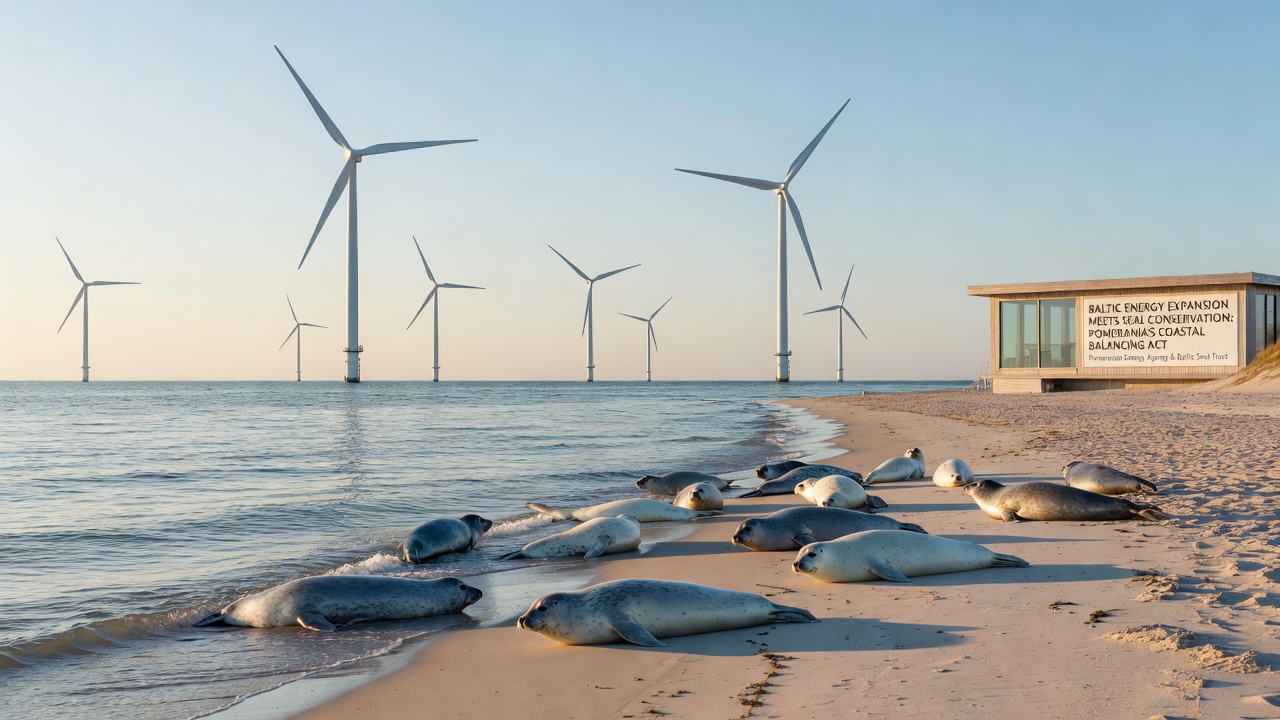
Protected areas such as the Natura 2000 site PLH220032 "Mierzeja Helska" and the Słowiński National Park buffer zones maintain strict access limits during breeding seasons, yet energy planners have coordinated with the General Directorate for Environmental Protection to establish 1.5-kilometer exclusion zones around known haul-outs during cable burial operations; compliance reports filed quarterly show that vessel traffic has been rerouted 8 kilometers seaward during sensitive periods, reducing observed disturbance events by 62 percent compared with baseline surveys conducted in 2019.
Regulatory Framework and Stakeholder Coordination
The Helsinki Commission (HELCOM) maintains binding recommendations on underwater noise and marine mammal protection that Poland transposed into national law through the Marine Areas Act of 2022; these rules require real-time acoustic monitoring during pile-driving and cable installation, with automatic shutdown triggers when received levels exceed 145 decibels at 750 meters, thresholds aligned with guidelines issued by the European Environment Agency rather than single-country standards.
Cross-border data sharing with Swedish and German authorities occurs through the Baltic Offshore Wind and Marine Environment working group, which released a joint report in 2025 documenting cumulative noise exposure across the southern Baltic basin; the report links increased vessel movements from energy construction to a measurable 14 percent rise in seal displacement events between 2021 and 2024, prompting updated permitting conditions for projects entering construction after January 2026.
Monitoring Programs and Adaptive Management
Long-term seal population monitoring stations operated by the Marine Station of the University of Gdańsk collect monthly aerial survey data and maintain a database of 1,850 individually photo-identified animals; preliminary analysis of 2025 imagery shows stable pup production rates at 380 individuals, yet distribution maps indicate a slight eastward shift in haul-out frequency away from the highest construction density zones near Łeba.
Adaptive management plans approved in June 2025 require quarterly review meetings that incorporate new telemetry tracks and noise measurements, allowing project operators to adjust vessel routing or timing if displacement metrics exceed predefined thresholds; such mechanisms have already led to a two-week postponement of certain cable-laying segments originally planned for August 2026 to avoid peak autumn dispersal.
Conclusion
Baltic energy expansion and seal conservation efforts in Pomerania continue to intersect through coordinated permitting, real-time monitoring, and seasonal restrictions that address both renewable targets and species protection requirements; records maintained by multiple agencies demonstrate that project timelines extending into September 2026 incorporate specific safeguards developed from telemetry and acoustic data collected over the preceding five years.